Why obesity treatment is becoming cardiovascular medicine
The first thing people often notice isn’t a number on the scale—it’s how stairs feel, how tight a waistband gets by midafternoon, or how a home blood pressure cuff suddenly reads higher than it “should” after the same routine. That’s part of why obesity treatment has started to sound less like cosmetic medicine and more like cardiovascular medicine: the day-to-day signals can change before weight looks dramatically different.
Over time, carrying extra body fat can nudge blood sugar control toward insulin resistance, raise baseline inflammation, and push blood pressure and blood fats in the wrong direction. None of that guarantees a heart attack or stroke, but it can quietly load the heart and blood vessels for years. Modern trials are responding to this by treating weight-focused therapies as tools to shift multiple risk markers at once—waist size, BP, A1c, LDL, even stamina and sleep—then asking the harder question: do these shifts translate into fewer real cardiovascular events, not just fewer pounds?
Cardiovascular risk changes that weight alone misses
Some mornings the scale barely moves, yet your watch shows a higher resting heart rate, or your socks leave deeper marks by evening. It can feel like your body is “ignoring” effort, when what’s really changing may be the stuff a bathroom scale can’t see: how hard your heart has to pump, how your arteries behave after meals, and where fat is stored (especially around the waist). Two people can share the same weight and still have very different blood pressure patterns, triglycerides, HDL, A1c, and sleep quality—and those differences often track cardiovascular risk more closely than pounds alone.
That’s why trials don’t just celebrate weight loss; they watch what moves alongside it. Waist and blood pressure may improve before clothing size does, while LDL can lag even when appetite is clearly down. Stamina can pick up in fits and starts, and swelling can come and go, making it easy to overinterpret a “good week.” The point isn’t certainty—it’s connecting everyday patterns to the risk markers that trials link to heart attack and stroke outcomes.
What modern trials measure beyond pounds lost
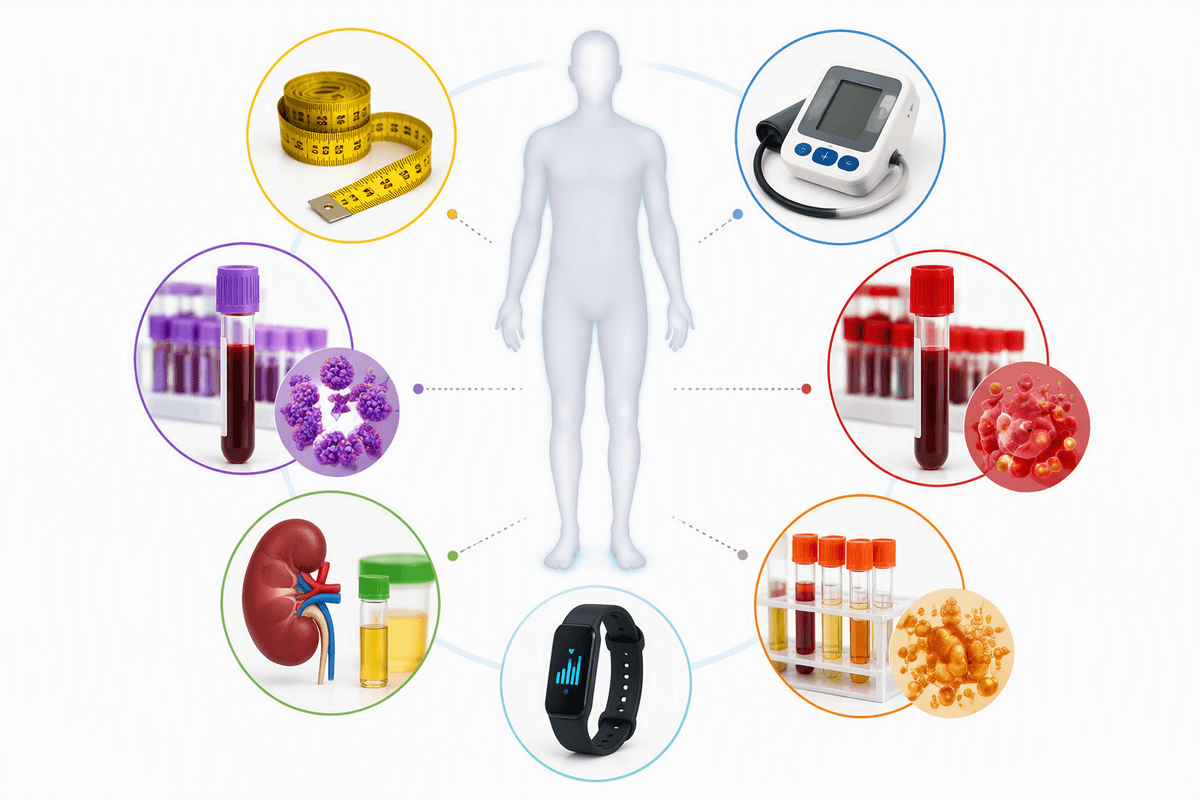
A couple weeks into a new plan, people often report a strange split: appetite is quieter and portions shrink, but their blood pressure log looks messy, or their energy only improves on certain days. That mismatch is exactly what modern trials try to capture. Instead of treating weight loss as the finish line, they track multiple “in-between” changes that can move at different speeds—waist size, office and home BP, A1c and fasting glucose, LDL and triglycerides, kidney markers, and sometimes exercise capacity or measured activity. Those are not just extra lab curiosities; they’re signals researchers can connect to whether heart attacks, strokes, heart failure admissions, or cardiovascular deaths actually become less common over time.
The day-to-day equivalents can be subtler and less reliable: fewer reflux episodes after meals, less breathlessness on stairs, improved sleep continuity, or fewer evenings with ankle tightness. But these patterns are inconsistent, and a single “good” or “bad” week can be misleading—so trials lean on repeated measurements and hard outcomes, not vibes, to decide what changed and what simply fluctuated.
Medicine classes being tested and their trade-offs
In the middle of a normal week, the first “proof” a medicine is doing anything may be oddly indirect: you realize you didn’t think about snacks all afternoon, then you stand up quickly and feel a little lightheaded, or your stomach seems to set the pace for the day. That’s the trade-off trials are sorting through. The newer appetite-and-metabolism medicines (often GLP-1–based, including dual-hormone versions) can move several markers at once—weight, waist, A1c, and sometimes blood pressure—but they also tend to bring more GI friction (nausea, constipation, early fullness) that can affect hydration, meals, and exercise consistency.
Other classes tested around cardiometabolic risk look “lighter” in different ways. SGLT2 inhibitors don’t usually quiet appetite as much, but they can shift fluid balance and glucose handling, which may matter more for some people’s blood pressure patterns than for the scale. Older weight-loss combinations can curb hunger too, yet may come with sleep disruption, jitteriness, or mood changes that complicate heart-rate and BP logs. None of these effects are guaranteed—what trials really measure is whether the pattern holds long enough to change actual events, not just short-term numbers.
When a sensible step causes confusing side effects

It’s often the “responsible” change that throws people off—smaller meals, fewer snacks, maybe a new medication—and then suddenly the body feels less predictable. A common example is the mix of early fullness and mild nausea that makes you eat less, but also makes you drink less without noticing. That can show up as constipation, a headachey afternoon, or a home blood pressure reading that looks higher one day and oddly low the next. It can feel like the plan is backfiring, when the issue may be more about hydration, salt, and timing than the direction of cardiovascular risk overall.
Trials try to separate these short-term side effects from the longer-term signals that actually matter: repeated BP trends, A1c and lipid changes over months, and whether exercise tolerance gradually becomes more reliable. In real life, though, people react to what they can feel—lightheadedness when standing, a racing heart after coffee, ankle tightness after travel—and those sensations can be real while still being inconsistent, especially during dose changes.
Who gets into trials and who gets left out
You might read a headline about a “heart outcomes” trial and assume it reflects people like you, then notice the fine print: a certain A1c range, a minimum BMI, a history of cardiovascular disease, or the opposite—no recent heart event, no unstable blood pressure meds, no significant kidney impairment. That mismatch is one reason real-life expectations can wobble. Trials often select participants who are likely to have enough cardiovascular events over a few years to measure a difference, and who can follow frequent visits, labs, dose changes, and tight reporting.
That structure inevitably leaves people out: those with messy schedules, multiple overlapping conditions, recent medication switches, severe GI issues, or advanced kidney/liver disease. Even age, and socioeconomic factors can tilt who enrolls and who stays. The result isn’t “fake” evidence—it’s evidence with edges. If your day-to-day pattern includes inconsistent blood pressure logs, swelling after travel, or fluctuating appetite from stress, you may not map cleanly onto the average trial patient, even if the risk markers sound familiar.
How evidence is reshaping care pathways over time
The moment that often changes the conversation isn’t a dramatic weigh-in—it’s a follow-up visit where your blood pressure trend is quietly better, your A1c or triglycerides have budged, and you realize you’ve been climbing stairs with fewer “pause points,” even though your weight loss has slowed. That’s the kind of mixed, real-life pattern trial evidence is starting to legitimize: the pathway isn’t just “lose pounds, then reassess,” but “track multiple markers and see whether they move together in a durable way.”
Over time, this is reshaping what “next steps” look like. Instead of waiting for weight to plateau before discussing cholesterol or blood pressure intensification, clinicians may treat appetite, waist, BP, LDL, and sleep as parallel levers—then use outcomes data to decide which combinations are worth the hassle of side effects, cost, and long-term adherence. The uncertainty doesn’t disappear; it just becomes more specific. If appetite is down but swelling, fatigue, or home BP readings keep cycling, that pattern may matter as much as the number you’ve lost.