Why Folegandros Still Feels Undiscovered
I hesitated over the ferry schedule with the same question most people have: if Folegandros is “undiscovered,” is it quietly magical—or just inconvenient. What tipped it for me is that the island doesn’t try to smooth its edges for you. There’s no glossy strip of beachfront bars to funnel everyone into the same sunset spot, and even in peak season the pace stays measured because the logistics naturally limit how many people drift around at once.
That sense of space comes with real constraints. Beaches here often mean rock, pebbles, or a rough path down rather than an easy sandy roll-in, and windy days can turn a swim plan into a hike-and-pivot situation. Without a car, you’re working with a small bus network and occasional taxis, so you feel the island more—great if you like coastal walks, less great if you want to “collect” beaches quickly. For a solo traveler, it’s the rare Cycladic stop where two to four days feels honest: enough time to settle in, not so long that transport limits start to feel like a chore.
It also helps to be clear about what it isn’t: not a Santorini alternative for nonstop views-and-cocktails, and not the place to expect endless soft sand. It’s for people who prefer a little friction in exchange for quiet.
Getting There Without Losing the Slow-Island Mood
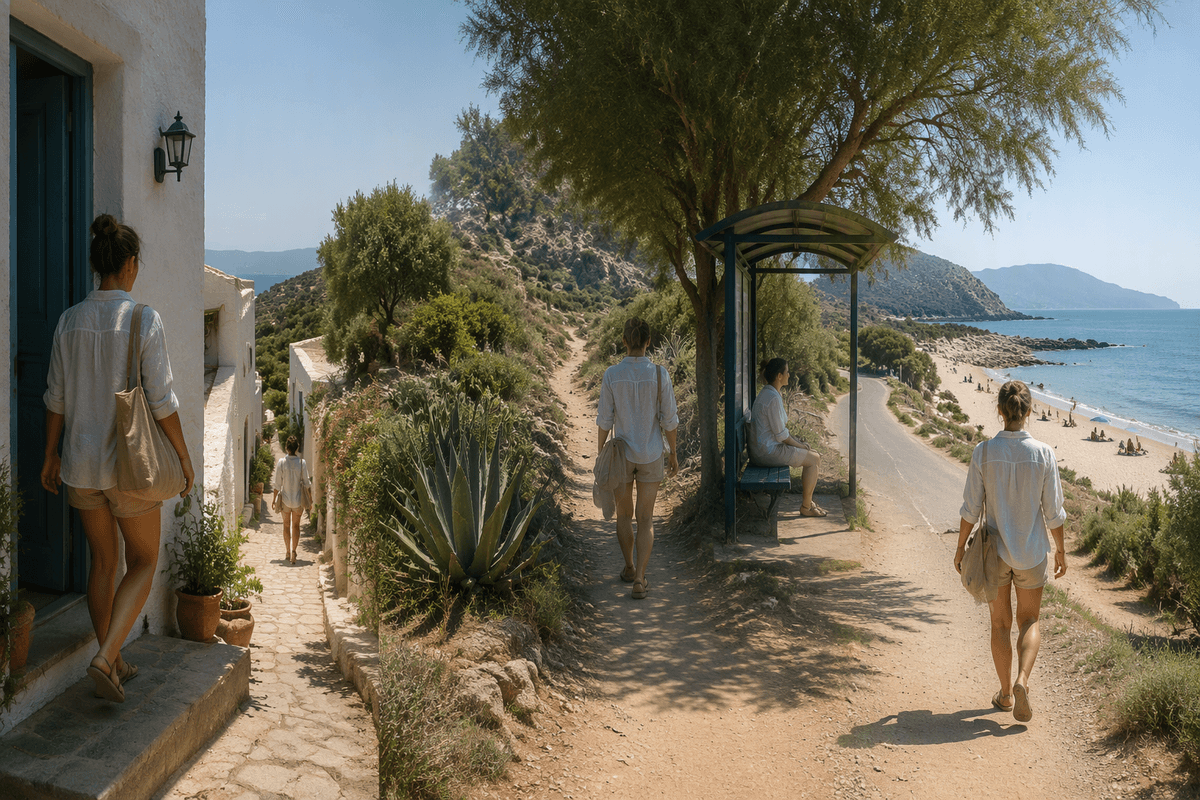
I felt the tempo shift the moment I chose a ferry that landed in Karavostasis mid-afternoon instead of chasing the earliest connection—less efficient on paper, but it meant I wasn’t arriving already stressed and hunting for a ride. The port is small enough that you can actually walk off the boat, orient yourself, and make a calm decision: bus up to Chora, or stay put and let the first evening be a swim-and-dinner one.
If you’re car-free, base choice quietly solves half the “rugged” question. Chora works best if you want evening atmosphere and easy wandering, but you’ll depend on the bus for swims and you’ll feel it when schedules thin out. Karavostasis is simpler for arrivals and quick dips, yet it’s sleepier at night. Ano Meria is the most peaceful, but without your own wheels it can feel like you’ve traded quiet for extra logistics.
For 2–4 days, I’d plan around one bus beach per day and one walk you can start from your doorstep; trying to stack three stops usually turns into waiting in the heat or paying for a taxi at the wrong time.
Chora’s Cliffside Heart: Where to Wander and Linger
The first time I walked into Chora, I made the classic mistake of thinking I’d “quickly loop it” before dinner—then the lanes kept folding into themselves, and suddenly it was dark and I was still following the sound of plates clinking somewhere above the cliff. It’s not hard to navigate, but it’s easy to lose time here, especially if you stop for every viewpoint and tiny courtyard that looks like it’s ending (and then doesn’t).
Chora works best when you treat it as your evening base: wander the car-free core, then drift toward the cliff edge where the wind feels sharper and the light lasts longer. The catch is the terrain—those steps and uneven stone alleys are charming until you’re carrying groceries uphill or heading back after a beach day, tired and a little sun-dazed.
If you’re without a car, aim to do your “big” wandering early or late, and keep midday flexible; Chora is at its easiest when you’re not trying to match your stroll to a bus timetable.
Rocky Beaches and Wild Swims Worth the Walk
I realized quickly that “beach day” on Folegandros starts as a routing problem: shoes on, water packed, and a decision about whether you want an easy bus hop or a longer walk that buys you solitude. The island’s coves tend to be pebbly or rocky, and the entry can be awkward when there’s any swell—fine if you’re confident in the water, annoying if you were picturing a lazy wade-in.
If you’re car-free, the bus-accessible staples (like Agali and the cluster of coves around it) make sense, but they also concentrate people at the same hours. I had better swims when I committed to one spot and stayed put, rather than trying to “sample” two beaches and spending half the day watching the clock. Wind is the wildcard: on a meltemi day, a cove that looks protected on a map can still feel choppy, and you don’t want to discover that after you’ve already hiked down.
For a solo traveler, the sweet spot is one walk-to-swim day and one bus beach day, alternating so your legs (and patience) don’t give out. Bring footwear you’ll actually walk in; the paths are doable, but flip-flops turn the island’s charm into pure friction.
Food, Sunsets, and Low-Key Nights Done Right
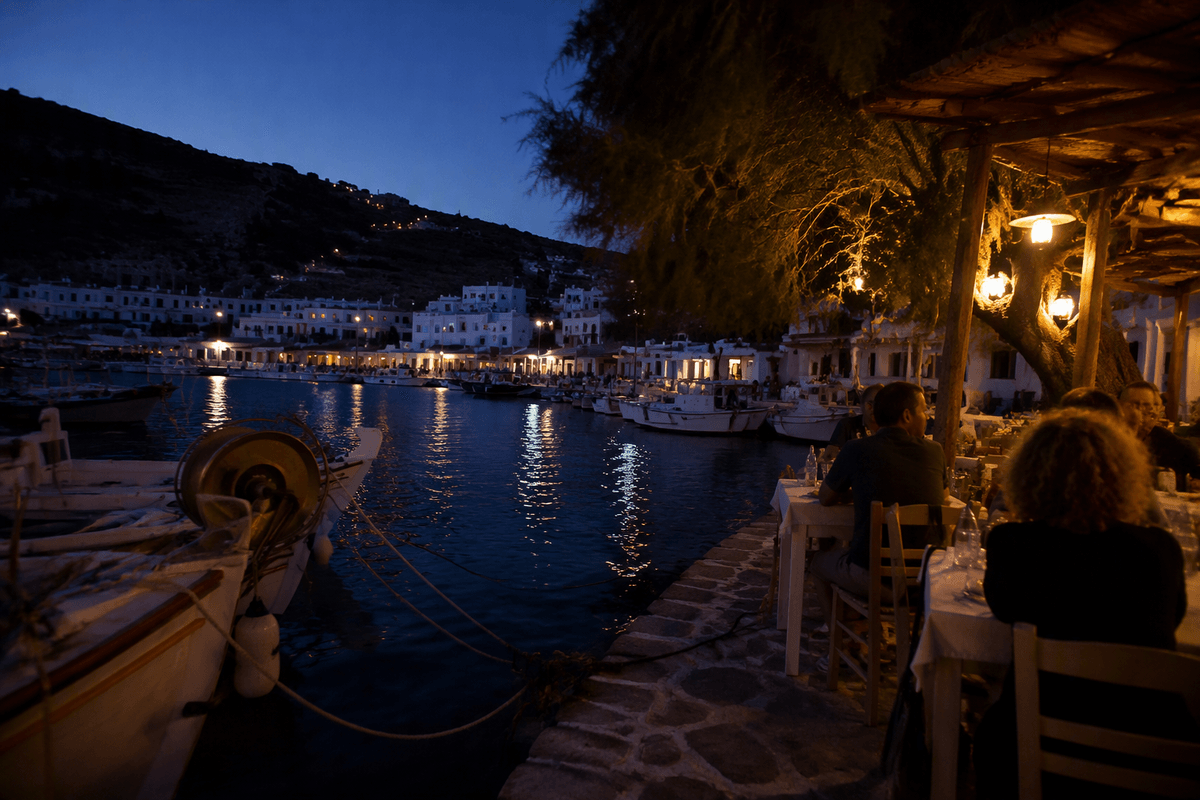
One night I aimed for an early dinner in Chora and still ended up waiting—nothing chaotic, just that gentle “everyone chose the same hour” squeeze that happens when restaurants are small and the lanes funnel you toward a few terraces. It worked better when I ate a little earlier than my usual city rhythm (or later, after the first wave), especially on windier evenings when outdoor tables are the first to get reshuffled. If you’re based in Karavostasis, dinner is simpler to snag but you’ll feel the quiet sooner; in Chora, you trade a bit of patience for atmosphere you can access on foot.
Sunset is similar: the cliff edge around Chora delivers without needing a booking, but it’s not a solitary secret, and the best perches fill up if you arrive at the last second. I liked treating it as a slow walk—stop when the light looks right, then drift into a low-key drink—because once you commit to a “sunset plan,” you start checking the time, and that’s when Folegandros pushes back.
Is Folegandros Your Kind of Cycladic Escape?
On my last morning, I caught myself doing the math again: could I have squeezed in more beaches if I’d rented wheels? Probably—but I also would’ve sped past the whole point. Folegandros fits if you’re happy with pebbly swims, short but real walks, and an island that makes you choose one good plan per day.
Base it like this: Chora if your evenings matter most, Karavostasis if you want the least-arrival friction, Ano Meria only if you’re truly chasing quiet and can handle extra coordination. Give it 2–4 days, prioritize one walk-to-water day and one easy bus beach day, and expect wind and timetables to occasionally win—if that sounds tolerable, you’ll probably love it.