Your Egypt planning moment: excitement vs overwhelm
I remember staring at my Egypt notes the way you stare at a too-ambitious menu: Cairo, Giza, Luxor, Aswan, Abu Simbel—plus the Nile somehow in the middle—feeling equal parts thrilled and slightly doomed. The first-time trap is trying to “add” Egypt, one landmark at a time, until your 12 days (including flights) quietly become a spreadsheet of 4 a.m. alarms, security lines, and transfers that look short online but hit differently in heat.
The key decision that calms everything down is this: are you using a Nile cruise to stitch Cairo to Aswan/Luxor with one moving hotel, or are you doing it DIY with a mix of flights and trains? Cruises simplify luggage and timing (you unpack once), but they lock you into someone else’s schedule and optional add-ons. DIY gives you control and can be cheaper in pockets, but it’s less forgiving—one delayed train or a “quick” hotel pickup that isn’t quick, and your buffers evaporate.
So the plan here is deliberately big-hit and paced: prioritize the ancient sites early in the day, keep museum time optional, and treat shopping as a bonus, not a requirement. You’re not trying to see everything—you’re trying to leave Egypt feeling like you actually saw it.
Days 1–3 Cairo (Must Giza; Opt museums; Skip bazaars)
My first real Cairo decision wasn’t which museum to start with—it was admitting that Giza deserved my freshest hours, not whatever energy I had left after traffic and a late breakfast. On Day 1, I treated arrival as a soft landing: check-in, an early night, and a quick neighborhood walk to sort SIM/cash rather than forcing “just one” big sight. It’s not glamorous, but it keeps you from burning a full day to jet lag and Cairo’s stop-and-go rhythm.
Day 2 was the anchor: Giza at opening, with a pre-arranged car (or hotel driver) so I wasn’t negotiating in the dark. The site is huge and exposed—by late morning the heat and crowds stack fast—so I focused on the pyramids and Sphinx first, then made the call on extras (camel rides, “special viewpoints,” add-on tickets) only if I still felt sharp. What worked: having small bills ready for the constant micro-requests. What didn’t: thinking I could “wing” a smooth exit; leaving at peak time is its own traffic event.
Day 3 stayed flexible: Egyptian Museum or GEM depending on your tolerance for crowds and how much you care about labels versus atmosphere. I skipped bazaars on purpose; the haggle fatigue is real, and it competes with your bandwidth for the ancient stuff. If you want a market moment, keep it short, go earlier, and set a hard walk-away time before it turns into a half-day.
Days 4–5 Luxor (Must Karnak; Opt Valley; Skip shopping)
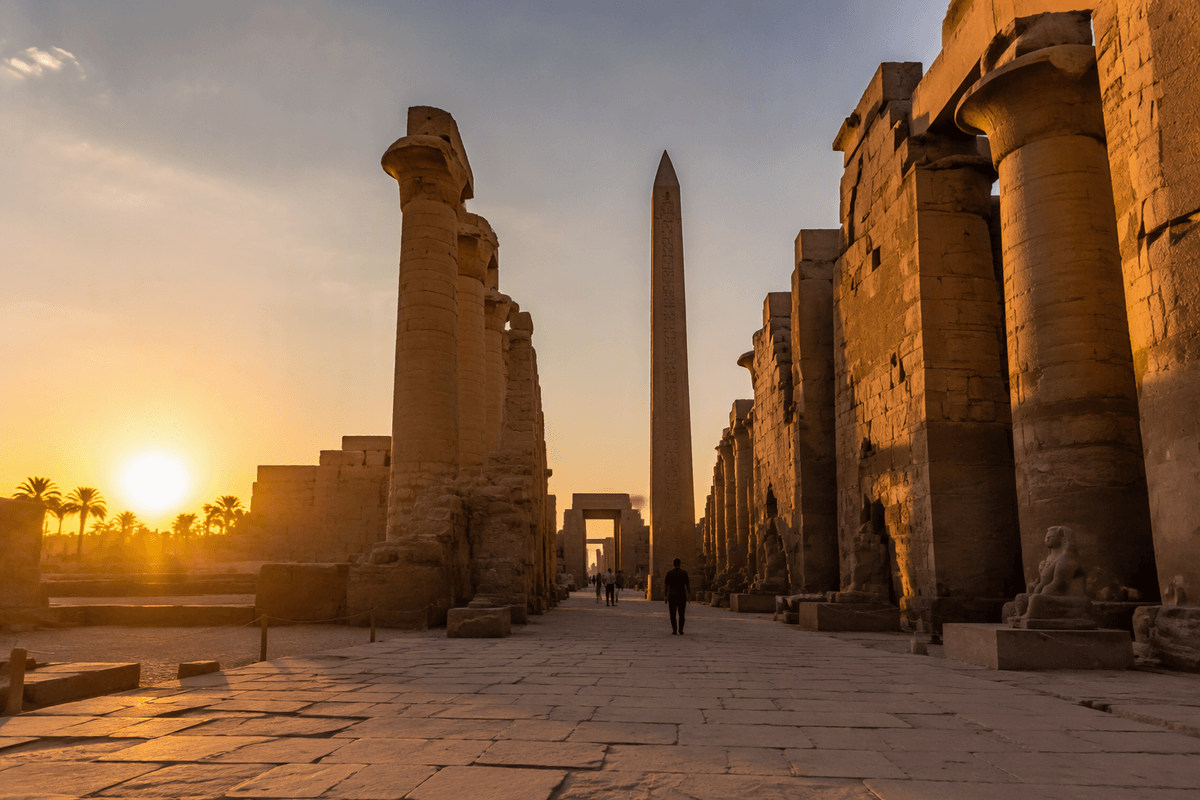
Getting to Luxor is where the itinerary either stays humane or starts to fray. I aimed to arrive the night before Day 4 (flight if I was protecting sleep; overnight train if I was protecting budget), because Luxor rewards early starts in a way Cairo doesn’t—you feel the difference in both temperature and crowd noise.
Day 4 was non-negotiable: Karnak right at opening, before the tour buses compress the main axis into a slow shuffle. What worked well was treating it like a single big site, not a scavenger hunt—pick a route, take breaks in the shade pockets, and leave while you still have attention for detail. What didn’t work was thinking “I’ll just pop into Luxor Temple too” at midday; the sun turns even short walks into a decision with consequences.
Day 5 is where you choose: Valley of the Kings if tombs are a priority (go early, and accept that the best-known tombs may require extra tickets), or a lighter West Bank mix if you’re already temple-saturated. I skipped shopping stops here on purpose—every “quick” alabaster visit quietly eats the one resource Luxor needs most: cool morning hours.
Days 6–8 Nile cruise (Must temples; Opt felucca; Skip extras)
The first time you board the cruise, the temptation is to treat it like a vacation inside the vacation—until you see the next day’s wake-up call posted in the lobby. Days 6–8 work best if you accept the cruise for what it is: a moving hotel that buys you fewer logistics decisions, not necessarily more rest. The nice part is obvious—your bag stays put, and you stop doing the daily mental math of drivers, check-outs, and “how early is early.” You’re on their clock, and that clock is usually set to “beat the heat and the buses.”
My “must” on these days was simple: do the included temple stops (often Edfu and Kom Ombo) and treat them like efficient, early-morning sprints. They’re spectacular, but they can blur together if you over-commit to commentary when you’re already running on Luxor fatigue. If you’re deciding where to spend money, I’d prioritize a solid guide for one key stretch over paying for every optional package onboard.
The optional that actually felt worth it was a short felucca moment if timing and wind cooperate—quiet, low-friction, and a different texture than docking-and-bus life. What I skipped: the “extra” add-ons that sound minor but stack up as fees, tips, and lost downtime. On a cruise, your real luxury is energy—protect it for Abu Simbel next.
Days 9–10 Aswan+Simbel (Must Simbel; Opt Nubia; Skip tours)
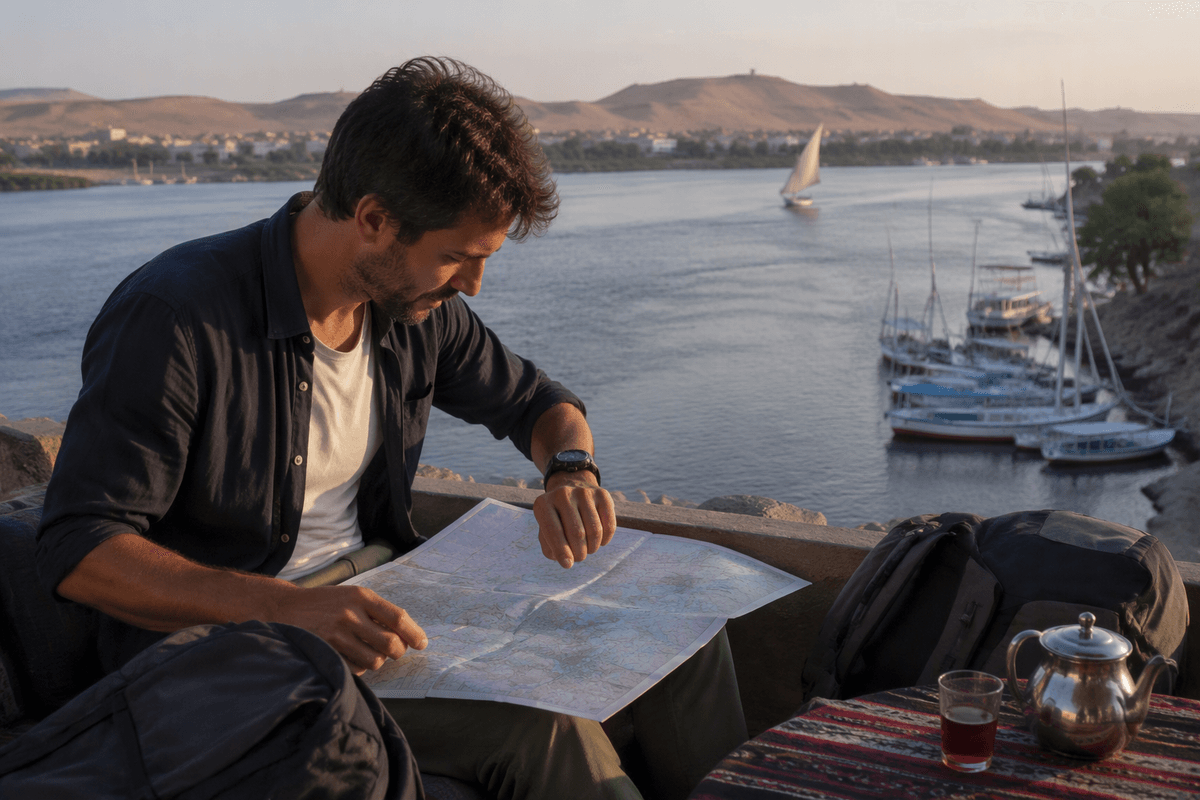
I felt the friction in Aswan immediately: after the cruise tempo, you’re suddenly back to making choices—wake-up time, driver reliability, and how much you trust a schedule that starts with “2:30 a.m.” Day 9 is the Abu Simbel day if it matters to you (and if you’ve come this far, it probably does). The drive is long and the checkpoints are real, so I booked a reputable car the day before and treated the morning like a flight: water, snacks, layers for the pre-dawn chill, and zero assumptions about finding coffee en route. What works: leaving early enough to arrive before the midday glare flattens the experience. What doesn’t: stacking anything ambitious after you get back—this is a fatigue bill you will pay.
Day 10 is where Aswan can feel like a reward instead of a transit hub. I kept it simple: a slower morning, then an optional Nubian village visit if I had the patience for boats and bargaining. Many “tours” here are mostly transport plus shopping pauses; if you want Nubia, aim for a direct boat arrangement and a clear return time, and skip any package that sounds like three stops when you only care about one. By afternoon, I was planning the next transfer with extra buffer—Aswan runs on its own clock, and it’s not always yours.
Days 11–12 Red Sea (Must snorkel; Opt desert)
The move to the Red Sea was the first time the itinerary felt like it could tip into “one transfer too many,” especially after Abu Simbel. I treated Day 11 as a recovery-and-water day: get to Hurghada or El Gouna (easy access from Cairo and a straightforward add-on from Upper Egypt if you’re willing to fly), check in, and immediately lock in a snorkeling plan for the next morning. What worked well was choosing a hotel that could arrange a reputable boat without a long pickup chain; what didn’t was assuming “beachfront” meant swimmable—some stretches are shallow, rocky, or just not pleasant in wind.
Day 12 was the must: snorkel early, before the boats stack up at the same reefs and before heat turns the deck into a slow bake. If you’re mid-range budget, you don’t need the fanciest package, but you do want two things: clearly stated gear inclusion (mask/fins, not just a life vest) and a realistic timetable that doesn’t promise five stops in one day. The optional that can work, if you still have energy, is a short desert quad or jeep outing—but it’s dusty, bouncy, and not the “rest day” your body thinks it’s booking.
Late nights collide with early transfers back to Cairo (or a flight home), and the Red Sea is one of the few places in this plan where doing less actually feels like doing it right.
On-the-ground logistics: transport, tickets, scams, tipping
The first logistics decision I kept re-making on the ground was whether to “just grab a taxi” or lock in a driver. In Cairo and Giza, rideshare worked when my phone had signal and I wasn’t in a crush of people; it failed most when I was tired, sunburned, and trying to leave a major site at the same time as everyone else. For early starts (Giza opening, Karnak, Abu Simbel), a pre-arranged car cost more but bought predictability—especially when a 15-minute delay can snowball into missed tickets or a miserable midday visit.
Tickets are the other quiet friction point. I kept a screenshot folder of my key bookings (flights, cruise confirmation, any major tour) because reception inside hotels and at sites isn’t a given. At several temples and tomb areas, “what’s included” and “what’s extra” isn’t intuitive, so I’d decide before the gate what I actually cared about—otherwise you get upsold while you’re already juggling water, cash, and patience. Buying add-ons on-site can be fine, but it adds queues at the exact hours you’re trying to protect.
On scams and tipping, my rule was boring but effective: agree on price and timing first, pay at the end, and treat help you didn’t ask for as optional. I carried small bills constantly—bathrooms, porters, quick assistance—and tipped calmly when service was real, not when pressure was loud. It kept the day moving, which in Egypt is worth more than being “right.”
Closing: trade-offs, pacing, and leaving Egypt prepared
The last day, the plan stopped being about ancient wonders and started being about my tolerance for one more early alarm. Egypt will always offer a “bonus” stop—one more tomb, one more temple, one more detour that sounds quick—and it’s usually the same trade: you can have the extra sight, or you can have a smoother transfer and a less frantic airport day. After twelve days, I found it easier to protect the exit: a boring buffer, a packed carry-on that actually makes sense, and the humility to let a missed “nice-to-have” stay missed.
If you take anything from this itinerary, let it be pacing math. Front-load the big outdoor sites into your coolest mornings, give yourself at least one soft afternoon per city to absorb delays and fatigue, and don’t stack Abu Simbel plus a same-day long transfer unless you truly handle low sleep well. The cruise-versus-DIY question also resolves here: cruises reduce decision fatigue but cap flexibility; DIY can buy time in the places you love, but only if you build in slack for Egypt’s real friction—traffic, queues, checkpoints, and the occasional “five minutes” that becomes forty.
Leave with your next steps already confirmed: airport transfer, flight times, and where your cash and tips are coming from on departure day. The win isn’t doing Egypt “perfectly”—it’s leaving feeling capable, not wrung out.