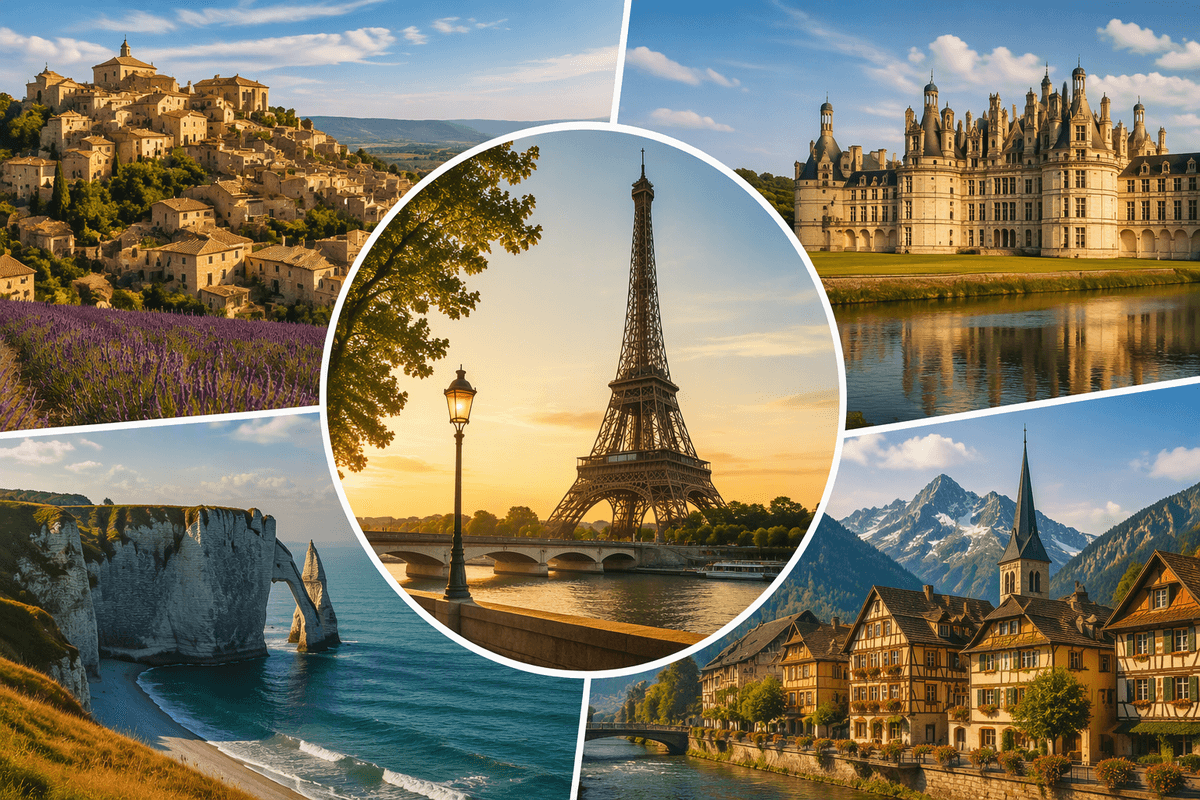
Why France’s “iconic” feels overwhelming
The first overwhelm hits before you even book: Paris, Provence, the Loire, Normandy, the Alps—each one is “essential,” and you only have 7–10 days. The friction isn’t a lack of options; it’s that France rewards slow travel, while vacation time demands speed.
On a map, Paris-to-Provence looks like a clean jump; in practice, it’s train schedules, check-in windows, and the quiet tax of moving hotels. Iconic spots also come with invisible costs—timed tickets, peak-hour lines, higher nightly rates—so squeezing in “one more region” can mean trading a full afternoon of actual sightseeing for logistics.
The way out is to treat every add-on as a trade: one long base (fewer packing days) versus two shorter bases (more variety), day trips versus overnights, and crowds in July versus breathing room in shoulder season. Once you price time like money, the shortlist gets much easier.
Paris essentials beyond the postcard
The first real decision in Paris isn’t “what to see,” it’s how much city you can handle without turning your days into a checklist. If you’ve only got 7–10 days for all of France, Paris wants a clean minimum of 3 nights so you’re not arriving, recovering, and leaving in a blur.
What works well is grouping by geography, not fame: one day anchored on the Seine (Louvre or Musée d’Orsay, then a long walk past the bridges at dusk) and another day for a single “big view” (Eiffel Tower or Arc de Triomphe) plus a neighborhood with staying power like the Marais or Saint-Germain. The part that doesn’t is trying to stack multiple timed entries across town—Métro transfers, security lines, and “just popping in” costs you hours.
If crowds are your constraint, buy one early-slot ticket for your top museum and let the rest be flexible: markets, bakeries, and a simple picnic in Luxembourg Gardens are cheap, low-friction wins that make Paris feel like a place, not a backdrop. The practical trade-off: fewer monuments, more actual time in the city—and more energy left for whatever region you add next.
Provence + Côte d’Azur: sun, villages, coast
The first Provence decision usually happens with a train schedule open: do you want lavender-and-villages, or do you want the coast—because doing both in 2–3 nights is where the wheels come off. What works well is choosing one base (Avignon/Arles for inland, Nice for the Riviera) and accepting that “iconic” here is more about pace than checkmarks.
Inland Provence rewards short drives and slow mornings, but the constraint is logistics: without a car, hill towns like Gordes or Roussillon become a patchwork of limited buses and pricey tours. If you rent, keep your loop tight—one village cluster per day—because parking and narrow roads turn ambitious itineraries into fatigue.
The Côte d’Azur is simpler by train (Nice–Antibes–Cannes hops are easy), yet the trade-off is crowds and cost: beach clubs and waterfront meals add up fast. A practical compromise is one “coast day” for the water and one “old town day” for shaded streets and markets, then move on before you start paying Riviera prices for downtime.
Loire Valley: châteaux without burnout
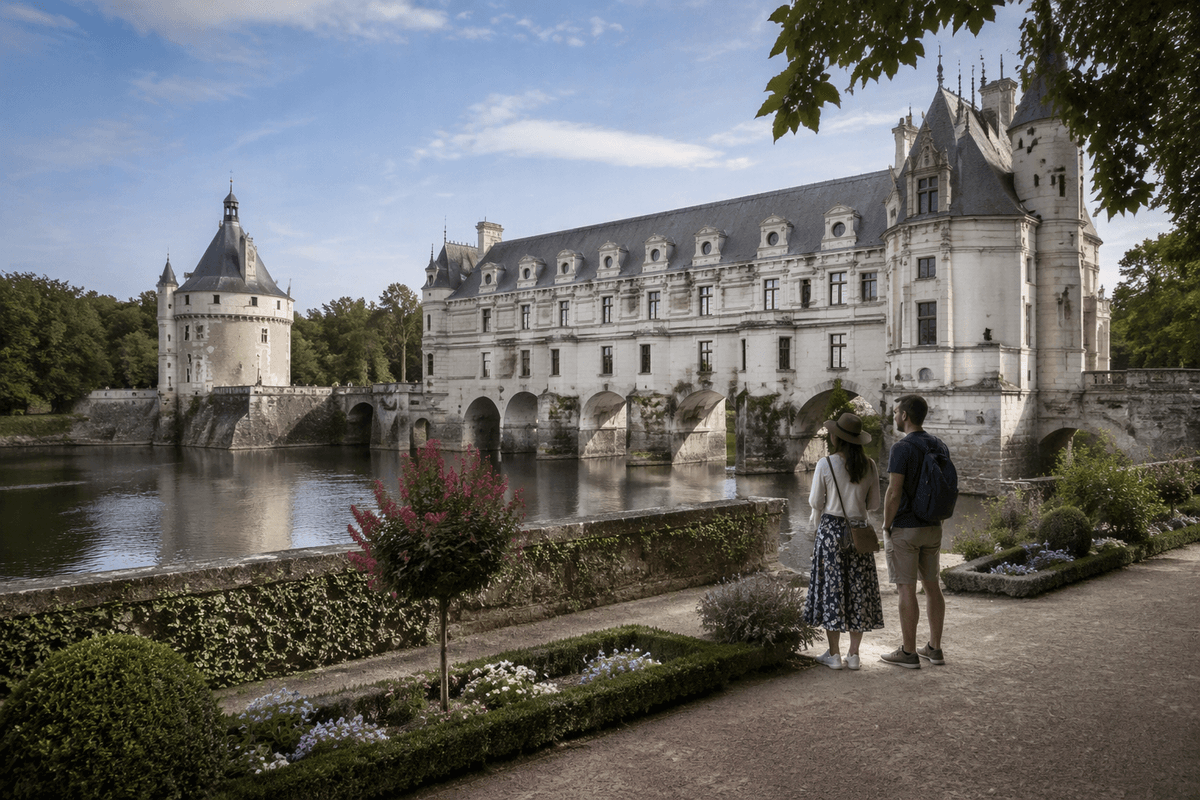
I almost overplanned the Loire the first time—pinning five châteaux like they were Metro stops—until I realized the region’s real friction is distance between “must-sees,” not entry fees. If you’re coming from Paris, the cleanest way to keep it sane is picking one hub (Tours for flexibility, Amboise for maximum charm) and treating the rest as a radius, not a road trip.
What works well is a two-château day with a long lunch in between: something big and different (Chambord’s scale, Chenonceau’s river setting) paired with one smaller stop you can actually absorb. The part that doesn’t is trying to stack interiors back-to-back—after the third set of tapestries and staircases, your brain quits before your legs do. Without a car, you’re trading money for simplicity via guided day trips or taxis; with a car, you’re trading effort for freedom, plus the slow leak of parking and rural driving time.
If you only have one day, choose quality over coverage and come back to Paris tired but not numb—Loire is best when it still feels like a detour, not a conquest.
Normandy + Brittany: history and wild shores
Normandy is where I learned that “iconic” can mean emotionally heavy as well as logistically awkward. From Paris, a D-Day beaches day trip exists on paper, but it’s a long day of trains plus a tour bus—or a rental car and constant clock-watching. What works better is one overnight around Bayeux or Caen so you can do the sites early, before the coaches stack up, and still have space for the museum without rushing through it.
Brittany rewards the extra effort with wilder coastline and fewer “everyone’s here” moments, but the constraint is time: it’s not a quick add-on after Normandy unless you’re willing to drop something else. If you go, pick one anchor—Saint-Malo for walls and tidal drama, or the coast farther west for hikes—because hopping towns burns daylight on slow roads. Also: pack a rain layer even in summer; the weather changes faster than your plan.
Alsace + French Alps: storybook towns, big peaks
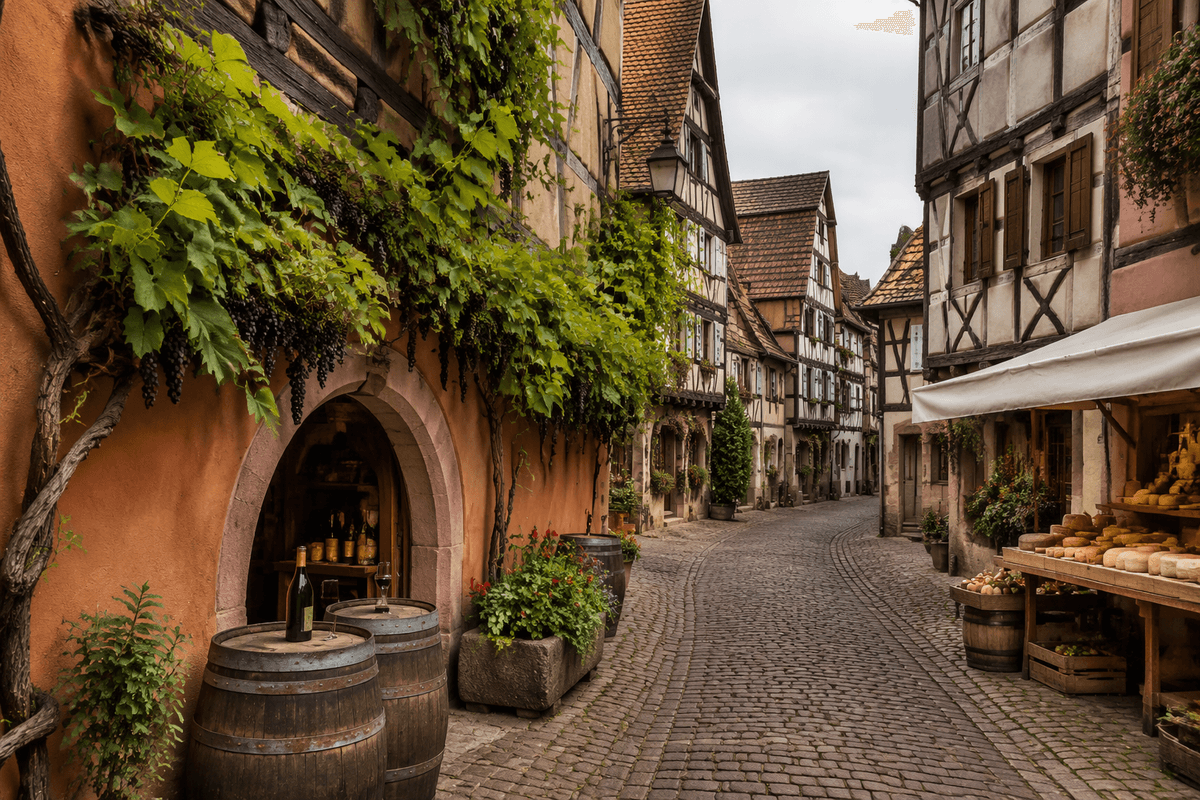
I hesitated over Alsace versus the Alps because they look close on a France map, but they don’t behave like a single add-on when you only have a week. What works well is treating them as two different trip “moods”: Alsace is compact, walkable towns and wine-route pacing; the Alps are about committing to one valley and letting the mountains set your schedule. Trying to squeeze both in after Paris usually means you spend your best daylight on trains.
Alsace is the easier win for mid-range budgets: base yourself in Strasbourg or Colmar, then do one small-town day (Riquewihr or Eguisheim) without needing a car if you’re willing to accept slower connections. The part that doesn’t is over-indexing on the “storybook” list—after the third half-timbered main street, it starts to blur unless you build in a market stop or a low-key wine tasting.
The French Alps pay off fast visually, but the constraint is weather and vertical fatigue. If you go, pick one base (Chamonix for big peaks, Annecy for lake-plus-mountains) and give it 2 nights so you have a buffer when clouds cancel your view. The trade-off is simple: fewer regions overall, but a day that actually feels different from the rest of France.
Choosing your mix: trade-offs, time, and transport
The moment your map starts looking like a zigzag, that’s your cue to cut. For 7–10 days, the cleanest mix is Paris plus one region—or Paris plus the Loire as a controlled detour—because every extra base steals a half-day in check-ins and transit.
Trains win for city-to-city speed; cars win for rural Provence/Normandy flexibility, with the trade-off of parking and decision fatigue. If you’re torn, choose the region that matches your limiting factor: crowds (shoulder season), budget (fewer moves), or energy (slower pace). The best itinerary is the one you can actually repeat tomorrow.