Why liver risk is often underestimated
It often starts with something easy to shrug off: a waistband that feels tighter after the same lunch rotation, a tiredness that shows up mid-afternoon, or a checkup note that says “mildly elevated enzymes” even though you feel basically fine. Because the liver is quiet—no obvious “ache” most days—people can assume the numbers are a fluke, or that only heavy, daily drinking counts as a real risk.
But liver strain more often looks like a slow math problem: a few extra drinks on weekends, sugary beverages that don’t feel like “food,” bigger portions that creep up, and long stretches of sitting paired with short sleep. None of it has to be dramatic to matter. The tricky limitation is inconsistency—some weeks are better, then travel or stress resets everything—so it’s hard to connect the pattern to the liver until the trend has been building for a while.
Everyday exposures that quietly strain the liver
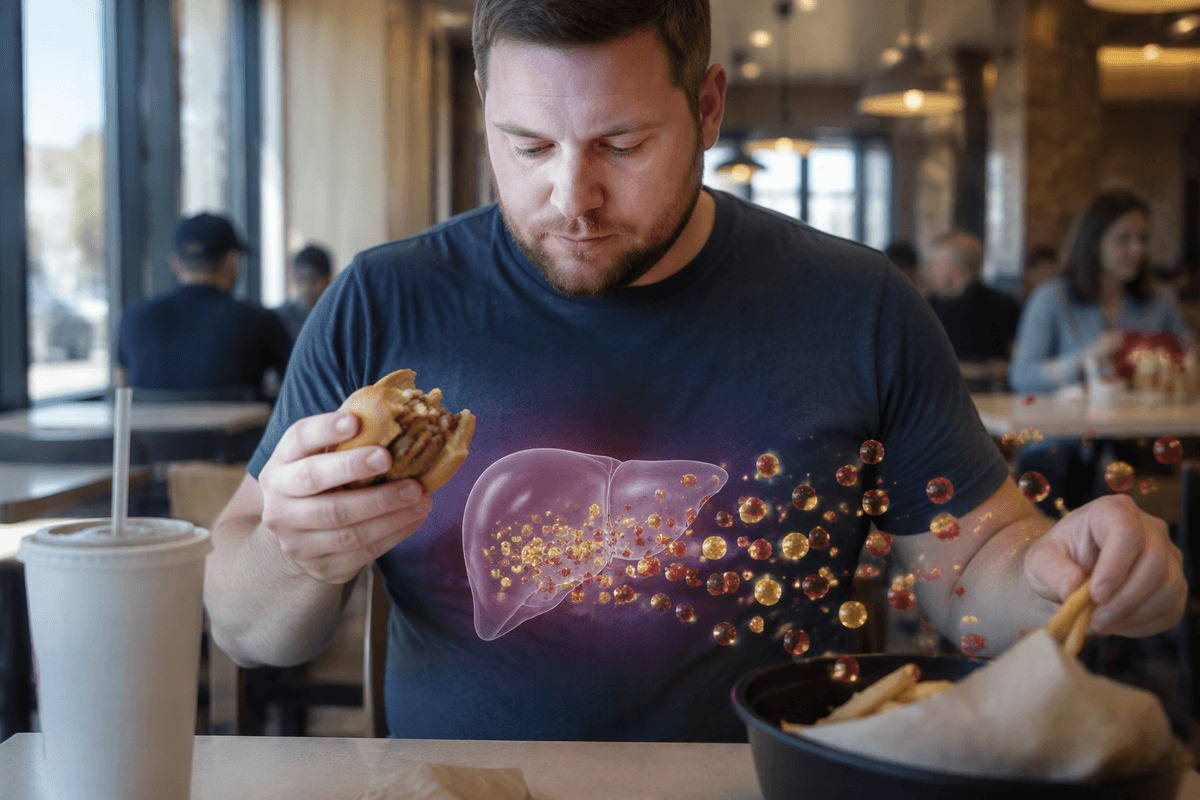
The part that throws people is how “normal” the inputs can look day to day. A couple of drinks while cooking, a refillable soda at lunch, a sweet coffee on the commute—none of it feels like a big event. Yet the liver is the place where a lot of that gets processed, repackaged, and stored, especially when calories arrive in quick bursts. Alcohol and added sugars can land like a double shift: they’re both handled as priorities, which may leave more circulating fat to be tucked away in the liver, even if dinner itself wasn’t huge.
Then there are exposures that don’t register as exposures. Long sedentary stretches can change how the body clears fat and sugar after meals, and short sleep can make appetite cues louder the next day. Supplements are another blind spot—“natural” doesn’t always mean gentle, and ingredient lists can be inconsistent. These strains rarely cause a clear signal right away; they show up more as waist drift, persistent afternoon fog, or labs that inch in one direction across a few visits.
Food patterns that support steadier liver function
You notice it most on the days you eat “fine” but still feel oddly heavy afterward—like the meal didn’t match the energy you got from it. Often it’s not a single food so much as the pattern: long gaps, then a large, fast meal that’s heavy on refined starch, added sugar, and fats that travel well in takeout. When those spikes happen repeatedly, the liver may end up doing more conversion and storage work, especially if the drink with dinner is also in the mix. The same meal can feel harmless one week and leave you sluggish the next, depending on sleep, stress, and how long you sat beforehand.
Steadier patterns tend to look less dramatic: meals anchored by protein and fiber (beans, eggs, yogurt, fish, chicken, tofu, vegetables), with sugary drinks and dessert treated as occasional extras rather than daily “defaults.” Even small swaps—water or unsweetened tea instead of soda, adding a salad or vegetables to a bowl—can soften how hard the liver has to manage the after-meal surge. But it’s rarely perfect; consistency is usually the harder skill than knowing what to pick.
Weight, insulin, and fatty liver feedback loops
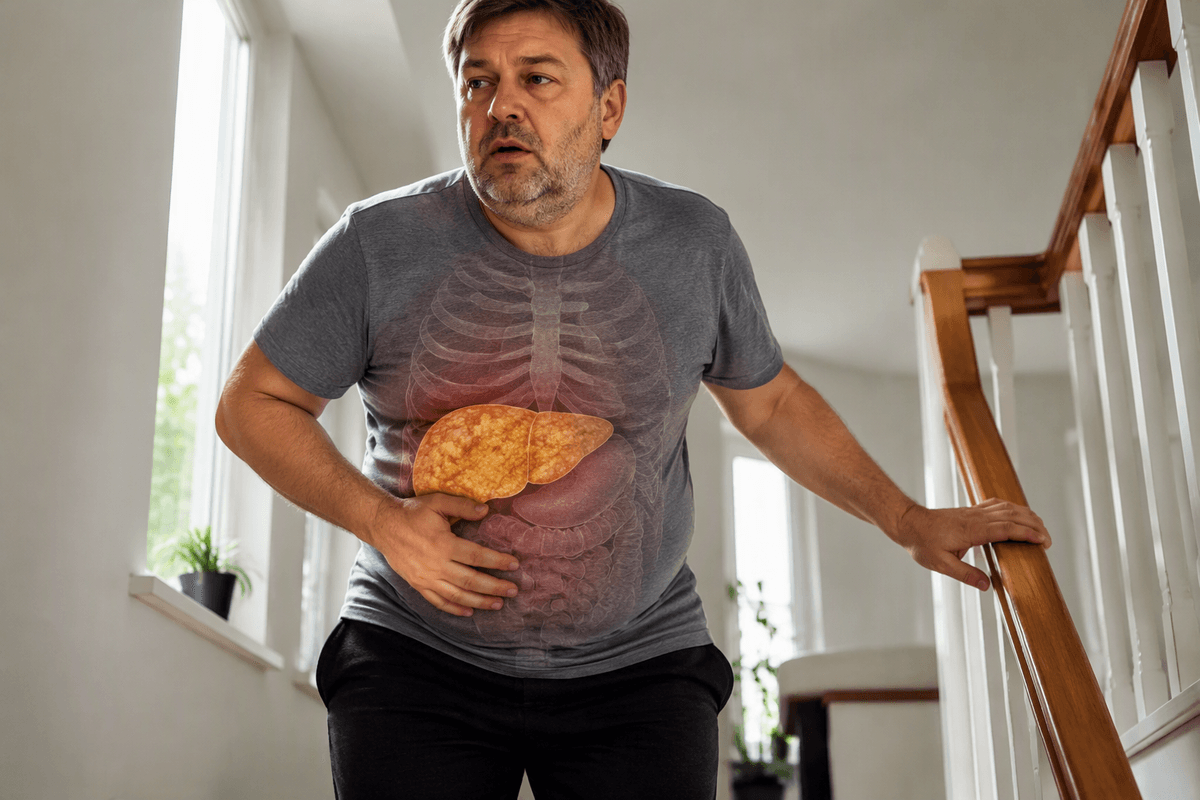
It can be strangely subtle at first: you climb the stairs and feel a little more winded, or you notice you’re hungry again not long after a carb-heavy lunch, even though the portion was bigger than it used to be. People often blame age or stress, but this is also where weight gain around the middle and shifting blood sugar control start to overlap. The liver sits in the middle of that traffic—taking in extra fuel, turning some of it into fat, and sometimes holding onto more than it can comfortably manage.
When that liver fat builds, insulin may work less smoothly, so the body needs more of it to keep blood sugar steady. That can push more fat storage, raise triglycerides, and make cravings and “snack drift” feel harder to resist—especially after short sleep or long sitting. You can have a few “good” weeks and still see labs or waist measurements lag behind, because these loops tend to unwind slowly.
Movement, sleep, and stress as hidden levers
It’s often a small cue, not a big failure: you sleep seven hours but wake up feeling unrefreshed, then spend most of the day planted in meetings, and dinner turns into “whatever’s fastest.” By the time you finally move, it’s late—and that’s when a drink can feel like the only off-switch. The liver doesn’t “feel” that day in the moment, but it may still respond to it: long sitting can leave post-meal sugar and fat hanging around longer, so more of it gets routed into storage instead of being burned.
Short or broken sleep can make appetite louder and patience thinner, which is why late-night snacking and bigger portions often show up during stressful stretches. Stress itself doesn’t add calories, but it can nudge choices toward quick carbs, and skipped workouts, and it can make recovery sleep inconsistent. The pattern is messy—one good walk doesn’t erase three sedentary days—so the “trend” is easier to miss than the individual moments.
When helpful choices create unexpected liver trouble
It can be jarring when you’ve been “trying” and the next set of labs still looks off. Someone cuts back on takeout, starts a new workout plan, and swaps cocktails for a “clean” nightly routine—then notices nausea after a supplement, darker urine after dehydration, or a new right-side heaviness that’s hard to place. The misunderstanding is easy: if the label says natural, or if a pain reliever is over-the-counter, it can feel automatically safe to stack on top of everything else.
But the liver still has to process what you add, not just what you remove. High-dose green tea extract, concentrated turmeric blends, muscle-building “stacks,” and even frequent acetaminophen—especially when mixed with alcohol—can be rough in some situations. Rapid weight loss can also temporarily shift fat traffic through the liver, so a fast drop on the scale doesn’t always match how you feel week to week. The same routine may seem fine for months, then become a problem when sleep, drinking, and dosing drift at the same time.
Monitoring, medications, and when to seek care
The odd part is how a “normal” week can still leave a paper trail. You might feel mostly fine, then notice your labs are described as “slightly up,” or your waist measurement keeps inching even when the scale doesn’t. It helps to think in trends: the same tests repeated over time, the same tape-measure spot, the same honest note about how often drinking really happened that month. A single good week before a blood draw can’t always hide a longer pattern, and a single bad weekend doesn’t always explain a persistent drift.
Medications and products matter here, even when they seem unrelated. Acetaminophen, certain antibiotics, cholesterol or diabetes meds, and “wellness” supplements can all change the picture—especially if alcohol, dehydration, or double-dosing is in the mix. If you notice yellowing eyes/skin, severe or worsening belly pain, vomiting, confusion, black/tarry stools, or very dark urine that doesn’t improve with fluids, it’s worth seeking care promptly rather than waiting for the next routine lab.