You expected 50,000 miles—then the tread disagrees
It usually starts as a small annoyance: the tires still look “fine” from a distance, but the steering feels a little louder on the highway and wet stops seem to take a beat longer than last season. Then you crouch down at the curb and the numbers on the warranty—50,000 miles—feel like they belong to someone else’s car. The wear isn’t even, either. One edge is thinning faster, or the front pair is getting smooth while the rear still has life. With tire prices up and schedules tight, the question turns practical fast: replace early, or figure out what’s chewing them up.
The frustrating part is that premature wear rarely has one clean cause. A few PSI off because the mornings got colder, skipped rotations during a busy stretch, or a minor alignment drift after a pothole can quietly cost thousands of miles. Even when tread depth still passes a quick glance, uneven wear is already telling you the “50,000” assumption no longer matches your actual driving and roads.
Read the wear clues before you change anything
Before spending money on an alignment or swearing off “aggressive driving,” take two minutes with a flashlight and your fingers. Start by comparing the inside edge, center, and outside edge on each tire—not just front versus rear. If the centers are wearing faster than both edges, it’s usually too much pressure for the load you actually carry day to day. If both shoulders are going first, that’s often too little pressure or a tire that’s been running hot on longer commutes. One shoulder only—especially on the fronts—leans more toward alignment or a rotation schedule that’s letting one position do all the work.
Then feel for texture. A cupped, scalloped pattern (high-low spots) can point to worn shocks/struts or a balance issue that’s letting the tire bounce. Feathering—tread blocks that feel sharp in one direction and smooth in the other—often shows the tire is being scrubbed sideways, which you won’t fix with pressure alone. This “read” matters because each guess has a cost: a $20 gauge and a reset beats paying for an alignment that wasn’t the main problem.
First fix: match pressure to your real life
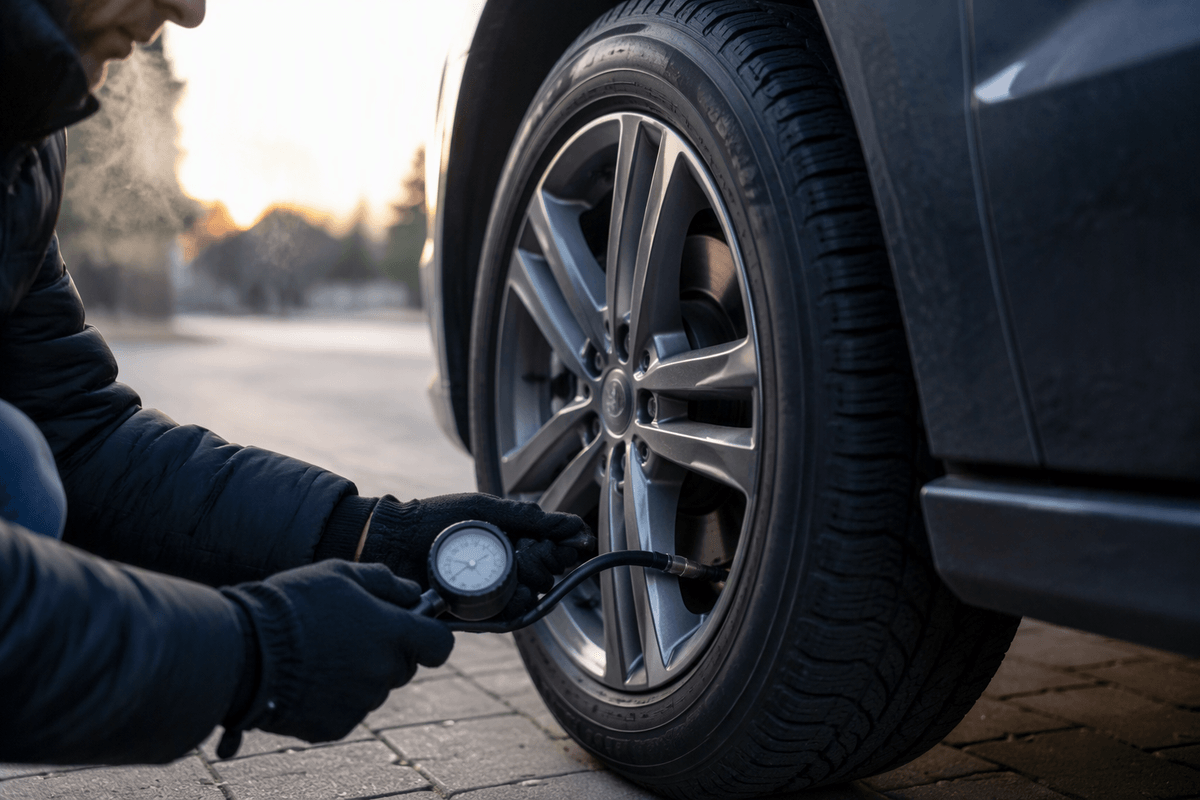
After you’ve looked at the wear pattern, the cheapest lever is still air pressure—but only if it matches how the car actually lives. Most people set it once and forget it, then the seasons change, the commute changes, and the tires quietly run 4–8 PSI off for months. That’s enough to change wear and braking, even if nothing “feels” wrong from the driver’s seat.
Use the door-jamb sticker as the starting point, not the number molded into the tire sidewall. Check pressure cold (before the morning drive), and do it on a schedule you can keep—like every other fuel stop or the first weekend of the month. If you’re hauling kids, gear, or doing a lot of highway at speed, being a couple PSI under tends to heat the shoulders and chew them faster. If your centers are wearing first, resist the temptation to “air up for mileage”; a few extra PSI can sharpen steering, but it can also reduce wet grip and ride comfort.
One constraint to accept: you can’t tune around weather for free. A cold snap can drop pressure overnight, and that’s when wear starts getting expensive.
Second fix: rotations and alignment that stop scrubbing
Once pressure is back in a sane range, the next frustration is realizing the car can still “eat” one position. Front tires do most of the turning and a lot of the braking, so if they stay up front too long they get noisy, then they get thin, and the rears look like they’ve been on vacation. Rotations aren’t magic—they’re just a way to spread the hard work around before the wear pattern becomes permanent. If you can’t remember the last rotation, assume you’re late. Tie it to oil changes if that’s the only appointment you reliably keep, even if the interval isn’t perfect.
Alignment is the one that stops sideways scrubbing, but it’s also the easiest place to waste money. If you feel a steering wheel that’s off-center, the car drifts on a flat road, or you’ve got one shoulder wearing fast after a pothole hit, pay for the alignment while there’s still tread to save. If the shop says it “won’t align,” ask what’s worn (tie rods, control arm bushings) before authorizing more work—because an alignment that won’t hold just buys you another bill.
Third fix: driving habits that set your mileage ceiling
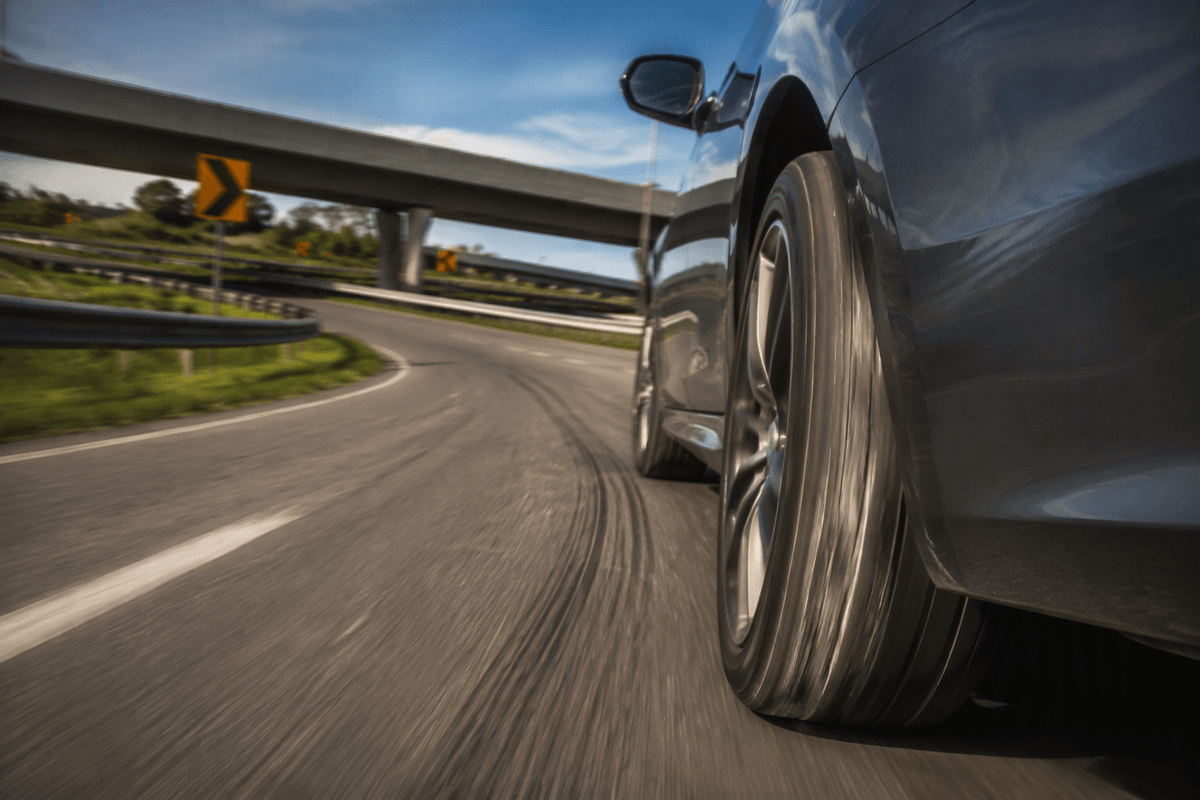
Even with pressure set and the tires rotating evenly, there’s a ceiling you hit if the car spends its days doing hard starts, late braking, and fast corner entries. You can feel it in the way the fronts get “dusty” at the outer edges or how the tread blocks start to look smeared instead of crisp. The cost shows up slowly—an extra 8,000 miles you expected turns into 3,000—and it’s hard to notice because nothing breaks all at once.
The biggest mileage killers are heat and scrub. Quick launches spin or micro-slip the tread, heavy braking loads the front tires and grinds off rubber, and taking ramps a little too hot drags the shoulders across the pavement. If you’re commuting in stop-and-go, the constraint is timing: leaving five minutes later can mean 30 more brake events. The fix isn’t “drive like a grandma,” it’s smoothing the peaks—ease into throttle, coast earlier, and keep corner speed reasonable so the tire rolls instead of scrubs.
One more limiter: impacts. Hitting potholes and curbs at speed can knock alignment back out and undo the money you just spent, so slowing for rough patches is a tire-life decision, not just a comfort one.
Know when chasing extra miles becomes risky
Eventually there’s a moment where the spreadsheet logic—“just squeeze another month”—runs into physics. The tires start talking in ways you can’t rotate or align out: a steady hum that gets louder with speed, a steering wheel shimmy that wasn’t there last week, or a wet stop that feels like it needs an extra car length. If you’re already budgeting around delayed replacement, those little changes are the warning that the margin is gone, especially heading into rain season or a long highway trip.
The hard line is tread depth and damage, not optimism. If the wear bars are close, if you can see cords, or if there’s a bulge or sidewall cut from an impact, “extra miles” becomes a gamble with a higher-priced loss—blowout risk, longer braking, and the chance you’ll ruin a trip and still buy tires at the worst time. Another constraint: uneven wear can make a tire look usable from one angle while the inside edge is already finished.
When you’re down to “maybe 1,000 miles left,” shift the goal. Stop chasing maximum mileage and start controlling timing: replace before the next stormy week, before a road trip, or before winter mornings make low traction feel normal.
A simple plan to avoid surprise tire bills
At this point the goal isn’t perfect tire life—it’s predictability. Pick one date each month to check cold pressures and do a quick inside-edge scan with a flashlight, because that’s where the “looks fine” tires get you. Keep a note in your phone for tread depth (even just three numbers: LF/RF/LR), so you can spot a fast mover before it turns into an emergency purchase.
Then tie the big-cost items to events instead of guesses: rotate at every other oil change (or a set mileage you’ll actually hit), and get an alignment after any hard pothole/curb strike or the first time the wheel sits off-center. Finally, start a tire fund the day you mount a new set—small automatic transfers beat a $900 week when school, rent, and rain all show up at once.